
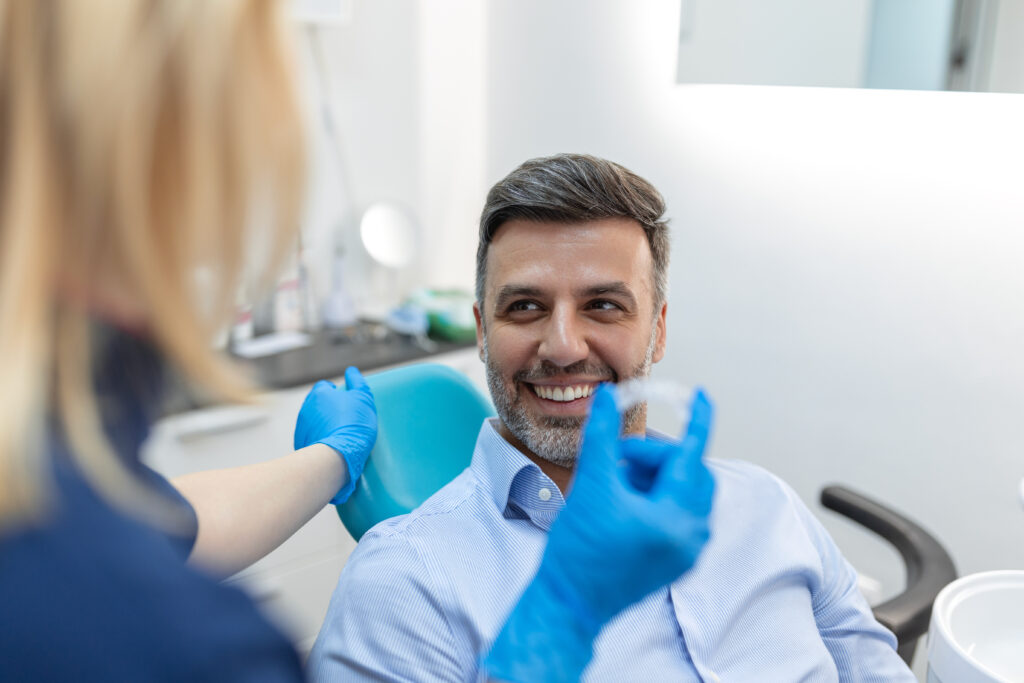
Bite misalignment can affect far more than your smile’s appearance. When your upper and lower teeth don’t meet properly, you may experience jaw pain, uneven tooth wear, difficulty chewing, and even headaches that impact your daily comfort and confidence. Exploring the various types of bite problems and whether cosmetic dentistry treatments like Invisalign can effectively address them is essential for making informed decisions about your orthodontic care.
At Boynton Beach Dental Services, Dr. Katiuska McIntosh-Falcon, a Gold Plus Invisalign provider, and Dr. Eliseo Fiffe specialize in correcting bite problems with clear aligner therapy. Their expertise helps patients throughout the Boynton Beach area achieve healthier, more comfortable smiles through modern orthodontic solutions that fit seamlessly into busy lifestyles.
Understanding Overbites and Underbites
An overbite occurs when your upper front teeth overlap your lower front teeth excessively. While a small amount of overlap is normal, a pronounced overbite can lead to complications such as jaw discomfort, accelerated enamel erosion, and potential damage to gum tissue. Some patients develop temporomandibular joint issues from the strain of misalignment.
An underbite presents the opposite scenario. Your lower teeth protrude beyond your upper teeth, creating an imbalanced bite that can interfere with proper chewing function. This condition may result in difficulty eating certain foods, speech impediments, and increased wear on specific teeth. Both conditions fall under the category of malocclusion, a term dental professionals use to describe improper bite alignment.
How Invisalign Addresses Bite Misalignment
Invisalign uses a series of custom-fabricated clear aligners to gradually shift teeth into their optimal positions. Each aligner applies controlled pressure to specific teeth, moving them incrementally over time. For bite corrections, the aligners work to reposition not just individual teeth but also the overall relationship between your upper and lower jaws.
The treatment process begins with digital imaging that captures precise measurements of your teeth and bite. We create a personalized treatment plan showing how your teeth will move throughout the process. Research from the National Institutes of Health demonstrates that Invisalign treatment shows statistically significant improvements in correcting bite problems, with studies reporting successful correction from negative overbite measurements to positive, healthy values after an average of 18 months of treatment.
For overbites, Invisalign gradually intrudes the lower front teeth while potentially extruding back teeth to create a more balanced vertical relationship. The aligners may include precision attachments, small tooth-colored bumps bonded to specific teeth that enhance the aligners’ grip and control. Some cases benefit from elastics worn between the upper and lower aligners to provide additional corrective force.
When Invisalign Works Best for Bite Correction
Invisalign proves most effective for mild to moderate bite problems caused primarily by tooth positioning rather than skeletal jaw discrepancies. If your overbite or underbite stems from the way your teeth are angled or positioned within properly aligned jawbones, clear aligner therapy often delivers excellent results. Many adults and teens achieve significant improvement without traditional braces or surgical intervention.
Certain factors enhance treatment success. Patients who wear their aligners for the recommended 20 to 22 hours daily typically see better outcomes. Consistent compliance ensures teeth move according to the treatment plan timeline. Advanced Invisalign features, such as SmartTrack material and optimized attachments, have improved the system’s ability to manage complex tooth movements, including the vertical adjustments needed for bite correction.
Limitations and Alternative Solutions for Invisalign
Severe skeletal discrepancies may require orthodontic approaches beyond clear aligners alone. When the upper or lower jaw is significantly larger or positioned differently than normal, comprehensive treatment may involve orthognathic surgery in combination with orthodontics. Extreme bite problems sometimes respond better to traditional braces, which provide more direct control over tooth movement.
The experienced team at Boynton Beach Dental Services conducts thorough examinations to determine whether Invisalign suits your specific case. Digital imaging and bite analysis reveal whether your condition falls within the range of what clear aligners can predictably correct. Some patients benefit from hybrid approaches that combine different orthodontic modalities.
Invisalign Treatment Timeline and Expectations
Bite correction with Invisalign typically requires 12 to 18 months for moderate cases, though simpler adjustments may take as little as six months. Complex bite problems might extend treatment to 24 months or longer. Your specific timeline depends on the severity of your misalignment, your age, and how consistently you wear your aligners.
Throughout treatment, you’ll visit the practice for progress checks every six to eight weeks. These appointments allow Dr. McIntosh-Falcon and Dr. Fiffe to monitor tooth movement and make any necessary adjustments to your treatment plan. Many patients notice improvements in bite comfort within the first few months as their teeth begin shifting into better positions.
Experience Expert Invisalign Care at Boynton Beach Dental Services
Dr. Katiuska McIntosh-Falcon and Dr. Eliseo Fiffe bring years of specialized training and experience to every Invisalign case. As a Gold Plus provider, Dr. McIntosh-Falcon has successfully completed numerous clear aligner treatments, demonstrating her commitment to advanced orthodontic care. The husband-and-wife team offers bilingual services and personalized attention that puts patients at ease throughout their treatment journey.
Contact our office today to schedule your Invisalign consultation and discover whether clear aligners can correct your bite problems. Our team will evaluate your specific needs and create a customized treatment plan designed to give you the healthy, confident smile you deserve.